





Dr. Karen Stollznow is a linguist, author, and researcher fascinated by language and what it reveals about people and cultures. Her work explores how we communicate, create meaning, and use language to understand ourselves and the world around us.
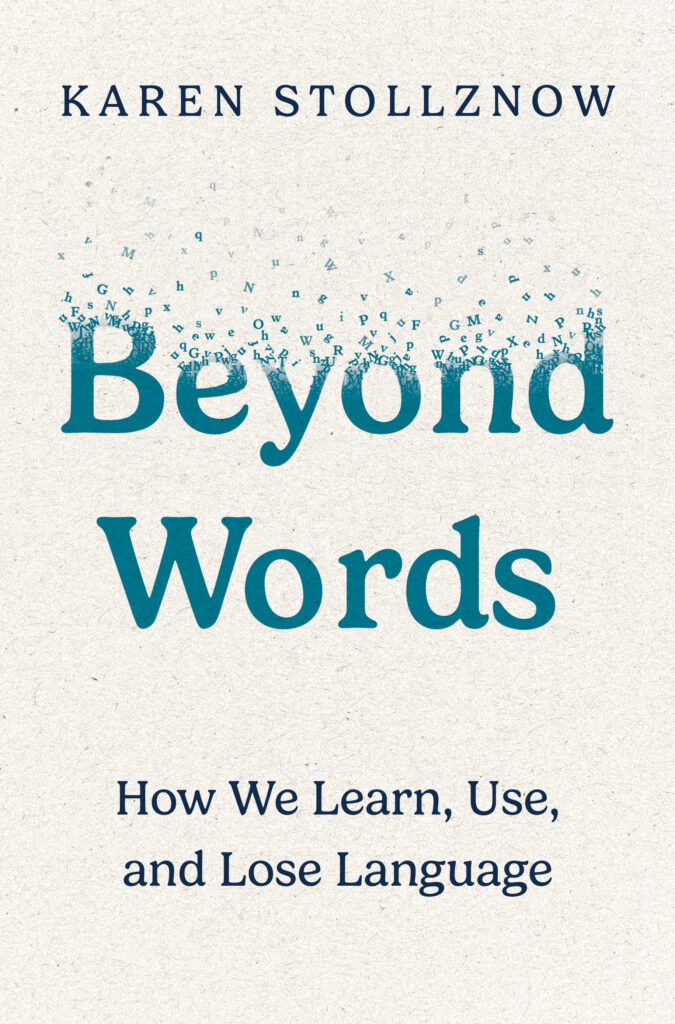
What is language, really? Where did it come from, and how did we figure it out? How do babies go from babbling to full sentences? Why can some people juggle multiple languages, while others wrestle with one? How does language work, and what happens when it doesn’t? With sharp insight and a sense of humor, Stollznow dives into the strange and endlessly fascinating world of language and the mind. From animal communication to AI, wild children to word slips, and first words to last, this book takes you deep into the science of psycholinguistics, where nothing is ever simple, and everything speaks volumes. Packed with pop culture, real-life cases, and eye-opening experiments, Beyond Words reveals how we learn, use, and lose language, and what it all says about being human. If you’ve ever fumbled for a word or feared forgetting your own name, this thoughtful, surprising book is for you.
Bitch: The Journey of a Word is a deep-dive into the surprising history and ever-changing meaning of this powerful word.
Bitch is a bitch of a word. It used to be a straightforward insult, but today—after so many variations and efforts to reject or reclaim the word-it’s not always entirely clear what it means. Bitch is a chameleon. There are good bitches and bad bitches; sexy bitches and psycho bitches; boss bitches and even perfect bitches. This eye-opening deep-dive takes us on a journey spanning a millennium, from its humble beginnings as a word for a female dog through to its myriad meanings today, proving that sometimes you can teach an old dog new tricks. It traces the colorful history and evolving meaning of this powerful and controversial word, and its relevance within broader issues of feminism, gender, race and sexuality. Despite centuries of censorship and attempts to ban it, bitch has stood the test of time. You may wonder: is the word going away anytime soon? Bitch, please.
“A sparkling and sophisticated examination of one of my favorite vulgarities—and one of the English language’s most fraught. I had been waiting for a detailed, book-length account of this word, whose long life is more colorful and fascinating than I even knew. Karen Stollznow was the perfect person to write it!”
— Amanda Montell, author of Cultish and Wordslut.
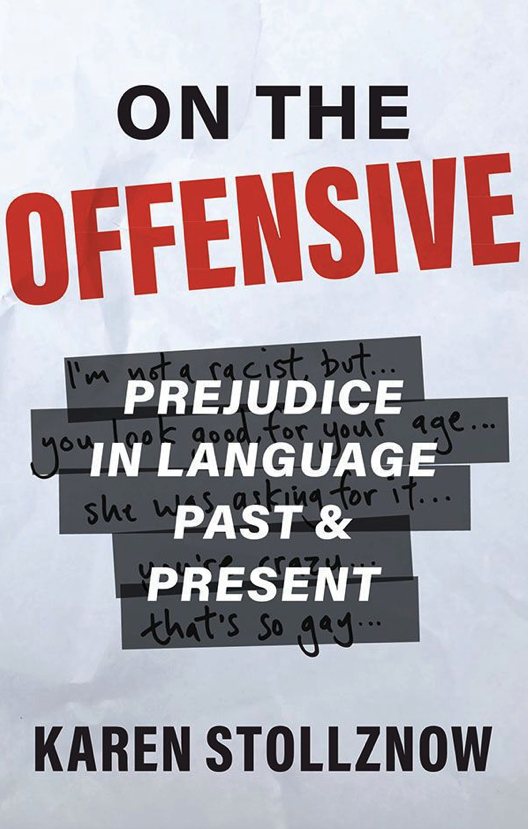
In a world of endless debates about “political correctness,” it can feel as though nobody agrees on what is offensive anymore. Why is one phrase dismissed as harmless by some people and deeply hurtful to others? Why are certain words taboo while others are reclaimed and embraced? In On the Offensive: Prejudice in Language Past and Present, linguist Karen Stollznow explores the racism, sexism, ageism, classism, religious discrimination, and other social biases woven into the words we use every day.
Drawing on linguistics, history, psychology, and popular culture, Stollznow unpacks everything from slurs and insults to microaggressions, euphemisms, tropes, and stereotypes. Rather than telling readers what they can or cannot say, the book asks a more interesting question: why do certain words and expressions offend? Engaging, thought provoking, and accessible, On the Offensive reveals how language reflects our attitudes, values, and beliefs, and promotes greater awareness of social issues surrounding identity, inclusion, and equality.
“I don’t think there is any more difficult topic in present-day language study than the vocabulary of offence. Karen Stollznow has done us all a great service in bringing together the largest collection of usages I have ever seen, in all the main areas of linguistic prejudice, and treating them in an enlightened, informative, and sensitive manner. It will help anyone who has ever offended others or been offended by a use of language – which means all of us.”
– David Crystal, author of How Languages Work and The Cambridge Encyclopedia of the English Language.